Skip to content

World

Topics from outside of this forum. Views and opinions represented here may not reflect those of this forum and its members.

A world of content at your fingertips…

Think of this as your global discovery feed. It brings together interesting discussions from across the web and other communities, all in one place.

While you can browse what's trending now, the best way to use this feed is to make it your own. By creating an account, you can follow specific creators and topics to filter out the noise and see only what matters to you.

Ready to dive in? Create an account to start following others, get notified when people reply to you, and save your favorite finds.

Register Login
  • aerba

    Dear CRYSTALlers,

    The Theoretical Chemistry Group of the University of Torino and the Department of Chemistry and the Thomas Young Centre at Imperial College London are organising the

    MSSC2025 Summer School on Ab initio Modelling in Solid State Chemistry

    logo_Full.png

    to be held in Torino (Italy), 8-12 September 2025. The School is designed for Master and Ph.D. students, as well as for post-docs and researchers who have an interest in getting or strengthening a background in Computational Solid State Chemistry, Physics, Materials Science, Surface- and Nano-Science.

    The week-long School consists of morning lectures and afternoon hands-on tutorial sessions, where the formal framework and functionalities of the CRYSTAL electronic structure package will be explored.

    Registration opens on March 15 2025. See the School website for further details.

    The School takes place in the elegant city of Torino (Italy):

    Torino.png

    ­
    While we strongly encourage in-person participation, we also offer the possibility to attend remotely through streaming of morning lectures and afternoon hands-on tutorials.

    Participants will have the opportunity to present their research at a poster session.

    See you in Torino!


  • job314
    This post is deleted!

    @job314 Yes, it should print the geometry of the last optimization step. Please, be aware that the CIFPRT and CIFPRTSYM options are not as general as one would like them to be. For systems where the primitive and crystallographic cells differ, they may result in an incomplete list of atoms. In those cases, I recommend switching symmetry off with the SYMMREMO option in combination with TESTGEOM, just to generate the .cif files correctly.
  • R.Zosiamliana

    Dear code developers',

    I am currently working on optical materials for optoelectronic device applications using CRYSTAL code. However, I have been unable to find any input files or methods for calculating photon energy (or frequency) versus optical parameters, such as the real and imaginary parts of the dielectric constant, refractive index, extinction coefficient, or optical absorption coefficient.

    While reviewing several research articles, I did not come across any studies where optical properties were calculated using the CRYSTAL code.

    Therefore, I would like to ask: Is it possible to calculate photon energy vs. optical parameters using the CRYSTAL code? If so, I would greatly appreciate any guidance on how to set up the input file for such calculations.

    Thank you in advance for your help!

    Best regards,
    R. Zosiamliana
    Physical Sciences Research Center (PSRC)
    Pachhunga University College
    Mizoram, India


    Thank you Jacques for your kind help. This will solve multiple problems of my current work Regards R.Zosiamliana
  • R.Zosiamliana

    When calculating the elastic constants (Cij​) for bulk materials, the output values are provided in units of GPa. However, when generating a [0 0 1] surface slab (2D) from the corresponding bulk material using the SLABCUT keyword, the output elastic constant (Cij​) values are given in Hartree (Ha).

    Could anyone please clarify whether these values are expressed in Ha/Bohr² or Ha/Ų, considering that the conventional SI unit for surface (Cij) in 2D materials is N/m?

    here is my output comparison between bulk and 2D surface

    For Bulk
    SYMMETRIZED ELASTIC CONSTANTS FOR CUBIC CASE, IN GPa

    | 121.241 47.439 47.439 0.000 0.000 0.000 |
    | 121.241 47.439 0.000 0.000 0.000 |
    | 121.241 0.000 0.000 0.000 |
    | 71.165 0.000 0.000 |
    | 71.165 0.000 |
    | 71.165 |
    For 2D-surface
    SYMMETRIZED ELASTIC CONSTANTS FOR TRICLINIC CASE, IN HARTREE

    | 2.059 0.349 0.000 |
    | 2.059 0.000 |
    | 1.099 |


    Thank you sir for your kind reply...
  • job314

    Thank you for the forum and responses. I have a typical problem for a rather simple mixed ionic/covalent system comprised of Na, Si and O only. Simple system but SCF convergence is not. Of note, I really like the presence of built-in basis sets and use them exclusively. I am running EOS (and not only) with cam-B3LYP/potTZVPrev2 built-in basis set. SCF starts converging to some 10-6 and then it starts oscillating. It is very typical of my medium-level CRYSTAL user attempts and expertise. it is an insulating state, with a bandgap of 10 eV, so no funny conductive state convergence problems. None of my attempts to use LEVSHIFT, NODIIS and FMIXING make it to converge to TOLDEE of 7 (or in EOS case to 8). Raising LEVSHIFT just leads to conducting state eventually and calculation does not converge. I understand that this is a triple zeta basis set but since it is built in and presumably balanced and robust, I was hoping it would lead to convergence somehow.

    input.d12


    @job314 Good point! About the shrinking factor: the anisotropic shrinking factor in CRYSTAL does not work properly for those calculations where the symmetry of the system may change (for instance in frequency calculations, FREQCALC, where displaced nuclear configurations are explored, or elastic calculations, ELASTCON, where the lattice is strained, etc.). So in general, I personally tend to avoid using an anisotropic shrinking factor. However, for symmetry-preserving calculations (such as SCF, OPTGEOM, EOS) the use of an anisotropic shrinking factor should be fine.
  • job314

    Dear all, I am running EOS calculation with pre optimization. I specify

    EOS
    RANGE
    0.92 1.08 8
    PREOPTGEOM
    MAXCYCLE
    500
    END
    BASISSET
    mTZVP 
    DFT
    B973C
    XLGRID
    END
    

    and it registers

    INFORMATION **** MAXCYCLE **** MAXIMUM NUMBER OF OPTIMIZATION CYCLES         500
    

    but then at some point in time preoptimization fails after 102 cycles only.

    CONVERGENCE TESTS UNSATISFIED AFTER 102 ENERGY AND GRADIENT CALCULATIONS
    
    ******************************************************************
    * OPT END - FAILED    * E(AU):  -6.954164500406E+03  POINTS  102 *
    ******************************************************************
    

    Sorry, I have been working fiercely on these cases, must have overwritten many times. Several EOS cases run out of cycles such as this after 102 cycles abive, including this one when I start range at 0.92 lattice constant (according to the online manual examples). Some of these problems went away when I narrowed the range, e.g. start at 0.96
  • job314

    I am running a rather simple crystal Na2Si2O5 with B973C and mTZVP . When calculation begins, I immediately get

    ERROR **** CHOLSK **** BASIS SET LINEARLY DEPENDENT
    

    This is strange since I already used B973C and mTZVP in other situations and it worked. This one seems random. Plus this basis set is built in and mandated to be used with B973C. Why is it linearly dependent and how to circumvent that?

    thank you


    thank you
  • job314

    Colleagues, I am looking for a procedure to calculate anharmonic shifts for C-H vibrations in molecular crystal. What if I have several C-H linkages, e.g. is there a way to automate this process for a large molecule or each C-H bond anharmonicity needs to be calculated in a separated calculation? Thank you


    Hi, In CRYSTAL23, the anharmonicity of a given vibration mode - or of a set thereof - can be computed via: I) the evaluation of cubic and quartic interatomic force constants (in the basis of the normal modes) followed by II) the solution of the nuclear Schroedinger equation with either the vibrational self-consistent field (VSCF) or vibrational configuration interaction (VCI) method. Details on the actual implementation of steps I) and II) can be found here: I) Anharmonic force constants II) VSCF and VCI for solids Step-by-step, the procedure is as follows: Geometry optimization to fully relax atomic positions within the cell (OPTGEOM keyword); Harmonic frequency calculation (FREQCALC keyword); Selection of the normal modes for which the anharmonic correction is to be computed (for instance, in your case, those corresponding to C-H stretching vibrations); Calculation of cubic and quartic interatomic force constants for the selected modes + VSCF (or VCI) calculation of anharmonic states. As an example, let' s assume that C-H stretching vibrations correspond to modes 15-20 in the list generated from the harmonic calculation (that is, there are 6 different C-H stretching modes). The input for steps 3. and 4. above would read: FREQCALC RESTART ANHAPES 6 15 16 17 18 19 20 3 0.9 VSCF END that is, we restart the harmonic frequency calculation, and where 6 is the number of modes, 15 16 17 18 19 20 are the selected modes, and 3 0.9 are two parameters specifying the numerical approach used for the evaluation of cubic and quartic force constants. Please, note that with such a calculation not only the "intrinsic" anharmonicity of each selected mode is evaluated but also the couplings among all selected modes. If, instead, one just wants to compute the "intrinsic" anharmonicity with no couplings, independent calculations can be run, one per each selected mode. Visit this page for a tutorial on anharmonic calculations in CRYSTAL
  • mones19

    I am getting multiple imaginary frequencies due to methyl rotational modes.
    I tried different functional/basis set and tightening the geometry optimization convergence but still imaginary frequencies persistently appear. What other options might solve the imaginary frequency issue?


    Hi, The presence of imaginary frequencies is a sign that the geometry is not a minimum of the potential energy surface (PES). In general, this may due to two main factors: 1) A somewhat loose overall numerical precision in the geometry optimization + harmonic frequencies calculation. Here, it seems that you have already explored a few parameters. We can distinguish between parameters governing the overall numerical precision of the SCF + forces calculations, and those that are specific to the evaluation of the Hessian: 1.1) Precision of SCF+forces One may increase a bit the thresholds for the screening of two-electron integrals (TOLINTEG keyword), switch-off the bipolar approximation (NOBIPOLA keyword), increase the shrinking factor (SHRINK keyword), use a denser grid for numerical integration of the exchange-correlation term (see XLGRID, XXLGRID keywords), tighten the convergence criteria for the SCF (setting TOLDEE to 10 or 11 for instance), tighten the convergence criteria for the geometry optimization step (see TOLDEG and TOLDEX keywords). 1.2) Numerical evaluation of the Hessian In many cases, a more numerically stable evaluation of the Hessian is achieved by use of a two-sided finite difference approach (rather than the default one-sided approach). This can be activated with the NUMDERIV keyword within the FREQCALC input block as follows: FREQCALC NUMDERIV 2 ENDFREQ 2) The presence of symmetry-constraints that prevent the optimizer to get to the minimum of the PES. If this is the case, removing symmetry constraints may be key to reach the minimum. This can be done by use of the SYMMREMO keyword (to be inserted in the geometry input block).
  • piquini

    I am using the script file below to submit crystal23 jobs in a cluster, and I would like to know a way to set the output filename in this script. Also, I would like to see the temporary content of the output file in my $PBS_O_WORKDIR directory. Is there a simple way to do that?
    In the way it is now, the output is going to the runerr file in the $PBS_O_WORKDIR directory, and only at the end of the calculation.
    The working directory is set to $CRY23_SCRDIR/$PBS_JOBID where the $SCRDIR = /work/ppiquini

    #!/bin/bash
    ### Name of the execution queue ###
    #PBS -q testes
    #PBS -N test33
    #PBS -o runout
    #PBS -e runerr
    #PBS -l nodes=1:ppn=4
    #
    module load openmpi/4.1.1-gcc-9.4.0
    #
    cd $PBS_O_WORKDIR
    echo "-----------------------------------------"
    echo "beginning of the job:" `date`
    echo $PBS_O_WORKDIR
    #
    source $HOME/CRYSTAL23/utils23/cry23.bashrc
    mkdir -p $CRY23_SCRDIR
    cp $PBS_JOBNAME".d12" $CRY23_SCRDIR/INPUT
    cd $CRY23_SCRDIR
    #
    mpirun -np 4 $CRY23_EXEDIR/$VERSION/Pcrystal 
    #
    cd /work/ppiquini
    rm -r ./$PBS_JOBID
    echo "Final do job:" `date`
    echo "-----------------------------------------"
    

    Dear Giacomo, it worked fine. Thank you very much!
  • othmen1983

    Dear users
    Please i need help to install the CRYSTAL17 Parallel execution. The serial sequence that i have previously installed works well.
    Many thanks in advance


    Thank you very much for your kind response.
  • HK

    Hello,
    I have completed the frequency calculation at room temperature. How can I restart the calculation with a different temperature while everything else is kept unchanged?


    Hi, By default, thermodynamic properties on top of harmonic frequencies are computed at room temperature. Different values of temperature can be explored by use of the TEMPERAT keyword. To restart the harmonic frequency calculation, use the RESTART keyword. An example is given below: FREQCALC RESTART TEMPERAT 5 200 600 END With the input above, thermodynamic properties will be computed and printed at 5 temperatures, equally spaced in the range 200-600 K.
  • boccunia

    Many people today are wondering: "What is a spin current?". While the question may seem legitimate, experts in the field might quip, "Well, of course, it's a current of spin, you dummy!" So, rather than focus on what a spin current is, I find it more interesting to ask: "Why is the spin current so important?"

    This is precisely what we explored in our letter titled "Unveiling the Role of Spin Currents in the Giant Rashba Splitting of Single-Layer WSe2." WSe2 (tungsten diselenide) belongs to the class of transition metal dichalcogenides (TMDs). In their monolayer form, TMDs have attracted significant interest due to their exotic physical properties and potential applications in spintronics. For example, the combination of space inversion symmetry (SIS) breaking, time-reversal symmetry (TRS) preservation, and strong spin−orbit coupling (SOC) leads to a giant Rashba-type I spin splitting at the top of the valence band in single-layer TMDs—ranging from 150 to 500 meV at the K point.

    Traditional Density Functional Theory (DFT) underestimates Rashba splitting due to the fact that the DFT Hamiltonian does not include SOC. Trying to incorporate SOC explicitly in the Hamiltonian leads to spin-current DFT (SCDFT), where the energy functionals E[n, Jx, Jy, Jz] (n, being the particle number density) depend on the noncollinear spin-current components Jx, Jy and Jz. In this letter we have tested two ways of extending DFT to SCDFT in order to properly capture the modifications to the electronic band structure of single-layer WSe2 due to SOC:

    • An explicit inclusion with the meta-generalized-gradient approximation functional (MGGAs) J-r2SCAN;
    • An implicit inclusion with the use of the hybrid PBE functional with a fraction of exact exchange.

    Our findings reveal that the systematic underestimation of Rashba splitting in the valence band—by about 15%—can be attributed to the absence of spin currents in traditional DFT. Indeed, SCDFT increases the Rashba splitting by 18–20%, aligning well with experimental values of 513 ± 10 meV. Additionally, SCDFT improves the description of quasi-degenerate band gaps at KK and KQ, as well as the gap at GammaK.

    In summary, we’ve demonstrated that spin currents are essential for accurately modeling SOC effects in 2D materials. SCDFT effectively resolves the Rashba splitting underestimation, positioning it as a superior alternative to standard DFT for spintronic materials. While hybrid functionals yield better band gap predictions, meta-GGA functionals that explicitly include spin currents enhance SOC accuracy. Future work will focus on combining the strengths of both SCDFT approaches.

    If you’d like to read the full letter, you can find it here:
    https://pubs.acs.org/doi/abs/10.1021/acs.jpclett.4c01607

    All calculations were performed using the CRYSTAL software. If you’re curious about visualizing spin currents, you can explore their beautiful swirls using the dedicated class available in the CRYSTALClear python framework:
    https://github.com/crystaldevs/CRYSTALClear


    Here is a nice paper for the SCF (spin-current fan) inside you! https://journals.aps.org/prl/abstract/10.1103/PhysRevLett.96.076604
  • piquini

    I am trying to run a SOC calculation on some oxides. I first ran a non SOC calculation, optimizing the structure. It converged normally. After that I created the following input file, to include the spin-orbit coupling contribution:

    XXX
    SLAB
    1
    12.69372704  12.68784779  120.044058
    32
    235    -3.586064252172E-04  1.785780347880E-01  1.434019668017E+00
    235     4.993953039180E-01  1.784529984229E-01  1.438839678176E+00
    ...
    ENDGEOM
    235 5
    STUTSC
    0 0 10 2.0 1
     9659.390000   -0.000371
    ...
    99 0
    ENDBASIS
    TWOCOMPON
    SOC
    ENDTWO
    DFT
    SPIN
    XXLGRID
    PBE0
    ENDDFT
    SHRINK
    24 24
    TOLINTEG
    8 8 8 8 30
    SPINLOCK
    0 50
    ATOMSPIN
    8
    15 +1
    16 +1
    19 +1
    20 +1
    13 -1
    14 -1
    17 -1
    18 -1
    MAXCYCLE
    400
    FMIXING
    60
    SMEAR
    0.001
    ENDSCF
    

    However, I am getting the following message at the output

     CYC   0 ETOT(AU) -1.055244791621E+04 DETOT -1.06E+04 tst  0.00E+00 PX  1.00E+00
     TTTTTTTTTTTTTTTTTTTTTTTTTTTTTT FDIK        TELAPSE     5489.51 TCPU     5471.81
     ERROR **** ZERO **** FERMI ENERGY NOT IN INTERVAL
    

    Since it is the first time I am using the SOC, I would like to known if I am doing something wrong or if is there a way to circumvent this SCF issue.


    No problem. Hope it helps.
  • AntonioGB

    Let's start this section

    Is there a way to tell from the .out if the calculation was performed either in the SCDFT or the SDFT formalism?


    Hi Antonio, Unfortunately, I don't think there is any specific print statement in the .out file that indicates if the calculation was run using either SDFT or SCDFT formalism. Maybe in newer versions of the code, we will add more information about this! I guess the only way to tell is by looking at the input file. A good practice could be to print the input file at the top of the output in your launch script, so that you always have a reference to your input for each output you generate.
  • fbodo

    CRYSTALClear is an open source project that provides an easy Python interface with CRYSTAL. The package allows you to quickly extract information from the CRYSTAL output files and to easily generate customizable plots of computed quantities. In particular, the package supports plotting functionalities for:

    Band Structures and DOSS Mechanical Properties IR and Raman Spectra
    bands.png DAFADNP_comp_04GPa.png phonon_soft_p21.png
    QTAIM Transport Properties Density Maps
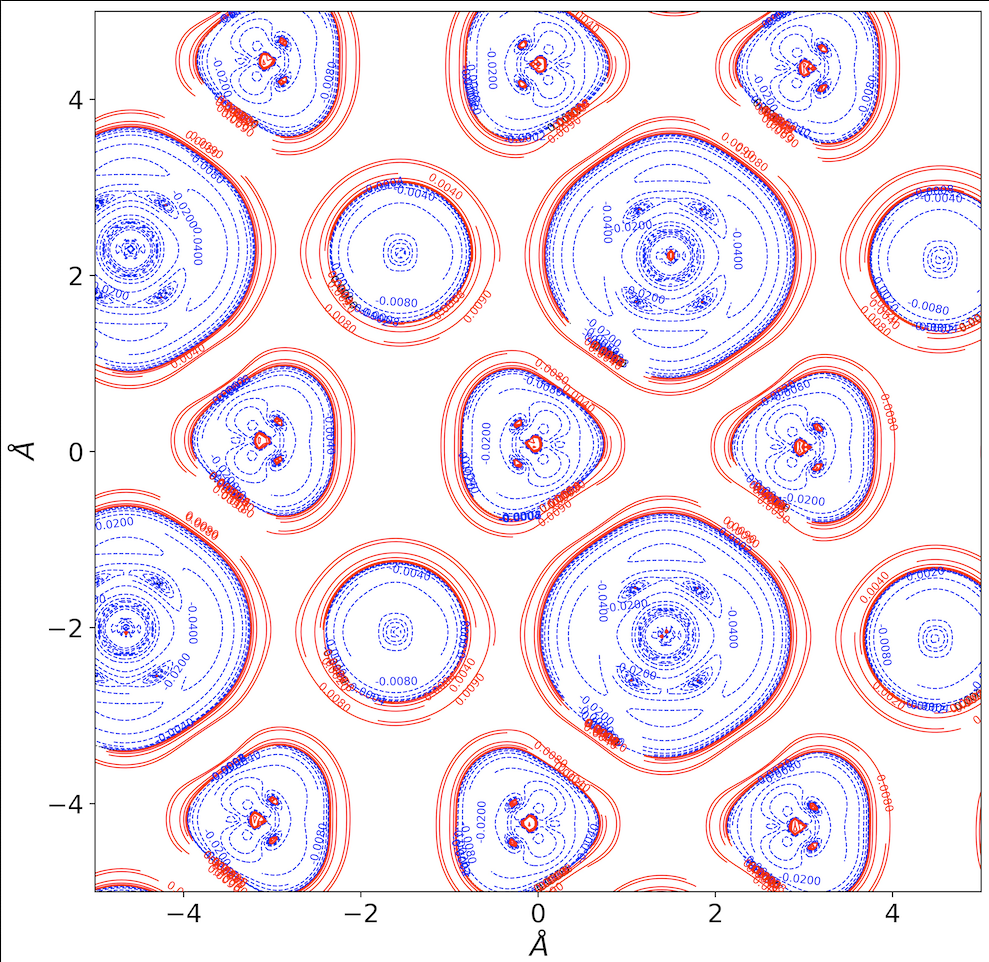
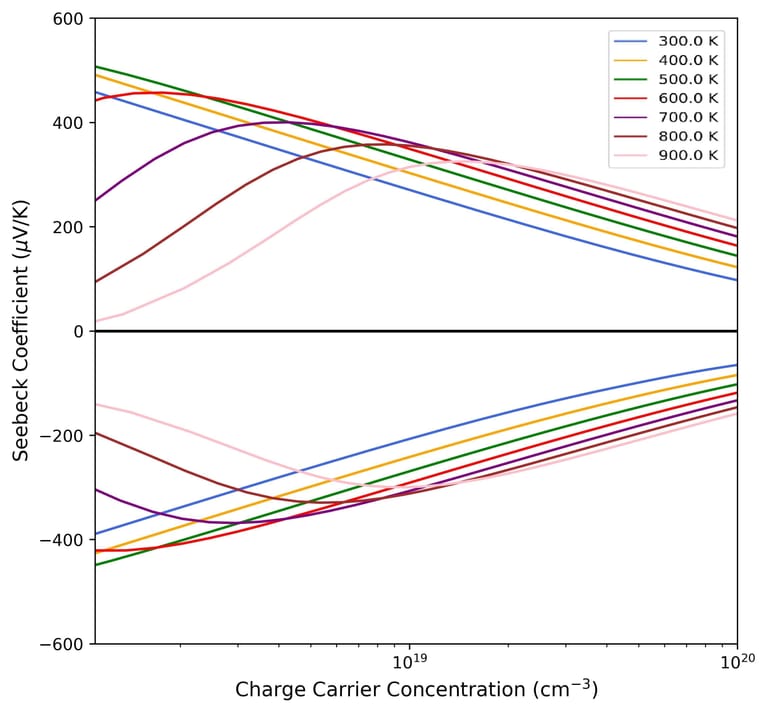
    Screenshot 2025-01-28 at 3.20.22 PM.png seebeck_calc_carrier.jpg soc-soc_alpha20_JZ.png

    For a more comprehensive review of the package capabilities we refer you to the Documentation Website.

    How to Install

    Prerequisites:

    • Python: Ensure you have Python installed on your system.

    • conda (Optional but Recommended): conda is a powerful package and environment manager that simplifies the process of managing Python dependencies. If you don't have conda, install it from the official Anaconda distribution: https://www.anaconda.com/

    Installation Steps:
    1. Create a Dedicated Environment (Recommended):
      Creating a separate conda environment for CRYSTALClear helps isolate its dependencies from other projects and avoid potential conflicts.
    conda create -n env_name python=3.9  # Replace 3.9 with your desired Python version
    
    1. Activate the Environment (Reccommended):
    conda activate env_name
    
    1. Install CRYSTALClear using pip:
    pip install CRYSTALClear
    

          This command will install the CRYSTALClear library and its dependencies.

    Verification:

    • Check Installation:
      After installation, you can verify the installation by importing the library in a Python script or interactive session:
    import CRYSTALClear 
    

          If the import is successful without any errors, the installation was successful.

    Additional Notes:

    • Dependencies: The CRYSTALClear library might have dependencies on other libraries. pip will automatically install these dependencies during the installation process.
    • Updating: To update the CRYSTALClear library to the latest version:
    pip install --upgrade CRYSTALClear
    

    Troubleshooting:

    • If you encounter any issues during installation:
      • Check for any error messages and try to resolve them based on the error descriptions.
      • Ensure you have an active internet connection.
      • Try updating pip to the latest version: pip install --upgrade pip
      • If the issue persists, consider creating a new conda environment and reinstalling the library.

    If you the issues persist please feel free to comment here below we will try our best to help you.

    How to Use it

    In order to use any of the feature available in the package the user need to generate
    a CRYSTAL object through the crystal_io module. Three classes are available to the user
    for different use cases:

    1. Crystal_output: To extract informations and generate the object required to plot
      from any .out file of the CRYSTAL package.
    2. Properties_output: To generate the objects required to plot any of quantities
      stored in the .DAT and .f25 files generated by the PROPERTIES module.
    3. External_unit: To generate the objects required to plot any of the quantites stored
      in .DAT and .f25 file generated by CRYSTAL.

    Once the object is generated the user can generate the desired plot using the functions
    in the plot module

    Example

       # Example Band Structure plot
       from CRYSTALClear.crystal_io import Properties_output
       import CRYSTALClear.plot as CCplt
       import matplotlib.pyplot as plt
    
       data = Properties_output().read_electron_band()
       CCplt.plot_electron_band(data, **kwargs) # see the documentation for the available **kwargs 
    
       # The plotting function returns a matplotlib object that can be visualized as follows
       plt.show()
    

    The plotting function will return one (or a list of) matplotlib object(s) that the user can easily modify as any other plot produced with the library.

    For a more comprehensive set of example we refer you to the following jupyter notebook repository.

    How to Contribute

    Any contribution to the project is more than welcome and greatly appreciated, given the open source nature of the project. If you'd like to do so, please check our guidelines on GitHub

    How to Cite

    If you use this package in any of your work we kindly ask you to cite the following pubblication:

    Camino, Bruno, Huanyu Zhou, Eleonora Ascrizzi, Alberto Boccuni, Filippo Bodo, Alessandro Cossard, Davide Mitoli, Anna Maria Ferrari, Alessandro Erba, and Nicholas M. Harrison, Comput. Phys. Commun. 292, 108853 (2023).

    @article{camino2023crystalpytools,
      title={CRYSTALpytools: A Python infrastructure for the CRYSTAL code},
      author={Camino, Bruno and Zhou, Huanyu and Ascrizzi, Eleonora and Boccuni, Alberto and Bodo, Filippo and Cossard, Alessandro and Mitoli, Davide and Ferrari, Anna Maria and Erba, Alessandro and Harrison, Nicholas M},
      journal={Computer Physics Communications},
      volume={292},
      pages={108853},
      year={2023},
      publisher={Elsevier}
    }

    

  • dmitoli

    Welcome to the official forum for CRYSTAL software users! This is a space to share knowledge, find support, and connect with others interested in solid-state simulations. To maintain a productive and respectful environment, we ask all members to adhere to the following rules:

    1. Be Respectful and Professional 🤝

    Treat all members with courtesy and respect. 🌟
    Avoid using offensive, discriminatory, or inflammatory language. 🚫
    Critique ideas, not people. 💡

    2. Stay On-Topic 🎯

    Ensure your posts are relevant to CRYSTAL software, solid-state simulations, or related topics.
    Avoid spamming, advertising, or self-promotion unrelated to the forum’s purpose. 🚷

    3. Use Clear and Specific Titles 🖋️

    Summarize your question or discussion topic in the post title.
    Avoid vague titles like "Help needed" or "Question." 🤔

    4. Provide Context and Details 🛠️

    When asking for support, include:
    A clear description of the issue.
    Relevant input/output files or error messages (as text or attachments, not screenshots). 📄
    Your system configuration and code version (i.e., CRY23-MPP, CRY17,...).
    Avoid posting confidential or sensitive data. 🔒

    5. Avoid Duplicate Posts 🔍

    Use the search function to check if your question has already been answered. 🤓
    If a similar thread exists, contribute to it instead of starting a new one. 🧵

    6. Follow Technical Posting Guidelines 💻

    Use code blocks or formatting tools for any code and error message. 📑
    Ensure attachments are in accepted formats (.d12, .d3, .out., .outp, .dat, .png, .jpg, .txt).

    7. No Unauthorized Sharing of Software or Licenses 🔑

    Do not share CRYSTAL software or any other proprietary content.
    Discussions about bypassing licensing restrictions are strictly prohibited. 🚫

    8. Moderation and Reporting 🛡️

    Moderators reserve the right to edit, move, or delete posts that violate these rules.
    If you see inappropriate content, report it. 📢

    9. Keep the Community Inclusive 🌍

    Encourage and support new users. 👋
    Avoid gatekeeping or discouraging questions from beginners. 🐣

    10. Follow Legal and Ethical Guidelines ⚖️

    Ensure your contributions comply with copyright laws and ethical standards. 📜
    Cite sources where applicable. 🔗


  • GiacomoAmbrogio

    The CRYSTAL code will have a dedicated full day at the upcoming Graduate School on Electronic Structure Theory at STFC Daresbury Laboratory, taking place 24–28 February 2025!

    This event is a great opportunity to:

    • Dive deep into the fundamentals of electronic structure theory.
    • Gain hands-on experience with CRYSTAL, alongside other leading software packages like CASTEP and QUESTAAL.
    • Learn both command-line and ASE (python based) interfaces.
    • Connect with peers and experts in the field.

    Whether you're a doctoral researcher, postdoc, or someone looking to enhance your expertise in electronic structure codes, the dedicated CRYSTAL day offers a valuable opportunity to develop a solid understanding of the code's features, gain practical experience, and understand how it fits into the broader landscape of computational tools.

    Event Details
    📆 Dates: 24-28 February 2025
    ⏲ Application deadline: 19 January 2025.
    📌 Venue: Science and Technology Facilities Council, Daresbury Laboratory, UK.
    🔗 Apply Now: https://ccp9.ac.uk/graduate_school_2025/

    Take advantage of this opportunity to expand your knowledge and experience with the CRYSTAL code in a collaborative and dynamic environment. We look forward to seeing you there!